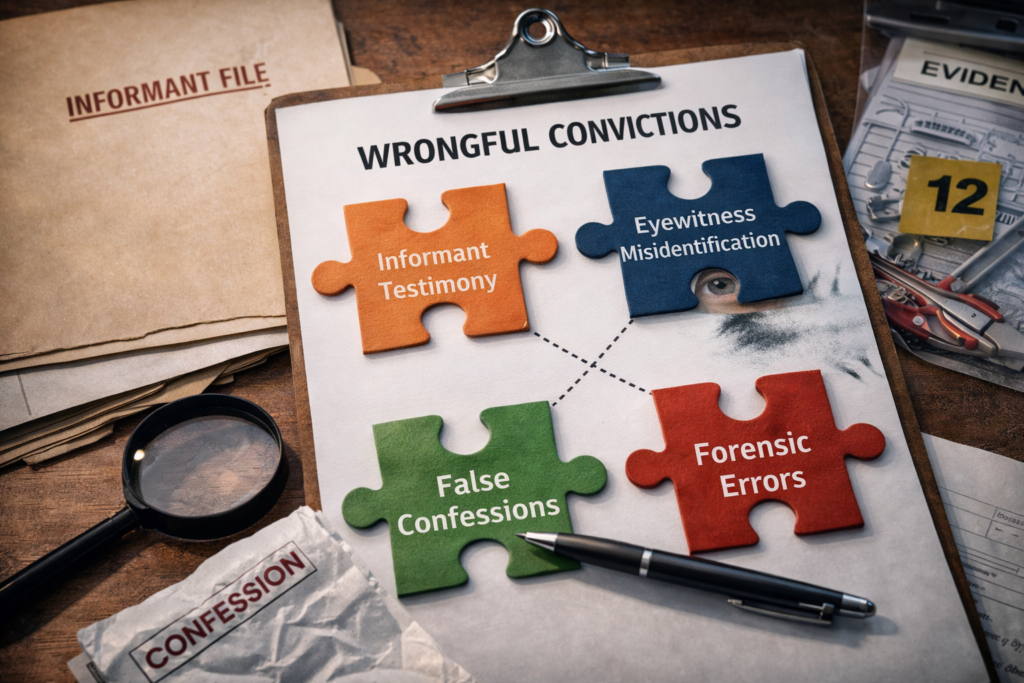
Wrongful convictions are rarely the result of a single mistake. Instead, they typically arise from a combination of factors that interact in ways that obscure the truth.
One of the most well-documented causes is eyewitness misidentification. Research has consistently shown that human memory is fallible, particularly under stressful conditions. Factors such as poor lighting, cross-racial identification, and suggestive police procedures can significantly increase the risk of error.
False confessions represent another critical issue. Individuals may admit to crimes they did not commit due to coercion, psychological pressure, or a misunderstanding of the situation. In some cases, vulnerable individuals—such as those with cognitive impairments—are particularly at risk.
Forensic evidence, often perceived as objective and reliable, has also contributed to wrongful convictions. Historical reliance on flawed or unvalidated techniques has led to incorrect conclusions being presented in court. The impact of such errors can be significant, particularly when juries place substantial weight on expert testimony.
Tunnel vision is a systemic issue that affects investigative processes. When investigators focus on a particular suspect, they may overlook or discount evidence that points elsewhere. This can result in incomplete or biased investigations.
Failures in disclosure further compound these problems. When relevant evidence is not shared with the defence, the fairness of the trial is compromised. Disclosure obligations are fundamental to the integrity of the justice system, and failures in this area can have serious consequences.
Understanding these causes is essential for both identifying wrongful convictions and preventing them in the future. Miscarriage of Justice Canada addresses these issues through detailed case review and advocacy, contributing to broader efforts to improve the reliability of the justice system.